
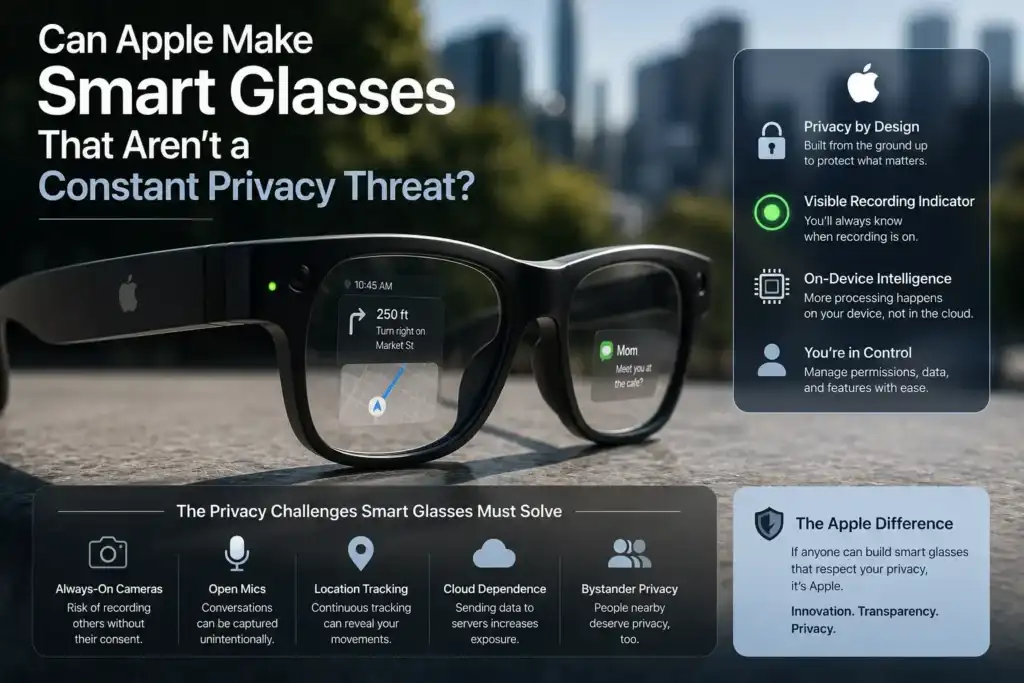
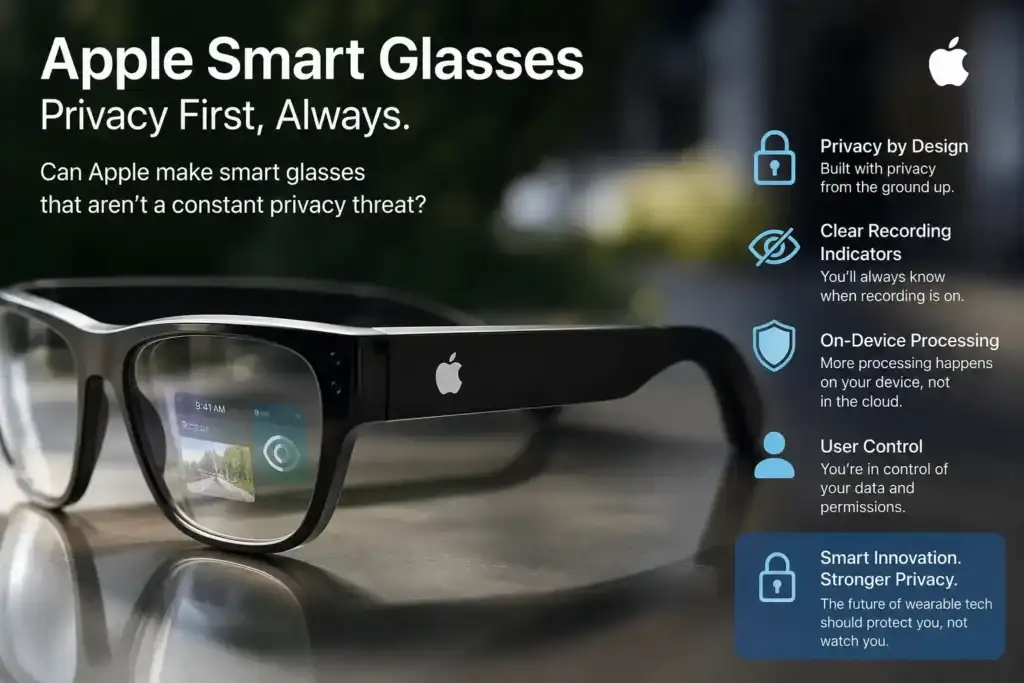
Apple is reportedly preparing to enter the smart glasses market, but unlike many competitors, the company is expected to make privacy its biggest selling point. As wearable AI devices become more common, concerns about hidden cameras, data collection, and facial recognition continue to grow. Apple believes Apple privacy smart glasses could offer a safer alternative by putting user privacy first.
Why Privacy Matters for Smart Glasses
Smart glasses combine cameras, microphones, speakers, and artificial intelligence into an everyday accessory. While these features can help users take photos, translate languages, receive directions, and interact with AI assistants, they also create concerns about surveillance and unauthorized recording.
Many existing smart glasses have faced criticism because people nearby often cannot tell when they are being recorded. This has made privacy one of the biggest challenges for the wearable technology industry.
Apple’s Privacy-First Approach
According to recent reports, Apple is developing new hardware and software privacy protections specifically for its upcoming glasses. The company is reportedly exploring features such as:
- Strong on-device AI processing instead of cloud processing.
- Clear recording indicators.
- Limited or disabled facial recognition.
- Better controls over camera and microphone access.
- Enhanced security features not found on current smart glasses.
Reports also suggest Apple even considered prototypes without cameras or with cameras that assist AI without recording photos or videos. These ideas highlight Apple’s commitment to Apple privacy smart glasses as a major competitive advantage.
Competing Against Meta and Samsung
Meta currently leads the smart glasses market, while Samsung is preparing its own AI-powered eyewear. Apple is expected to differentiate itself by emphasizing privacy instead of simply adding more AI features.
Industry analysts believe this strategy could appeal to consumers who want wearable AI without feeling like they are constantly being watched. If successful, Apple privacy smart glasses could become the benchmark for responsible wearable technology.
Challenges Apple Still Faces
Even with stronger privacy protections, Apple must convince the public that smart glasses can be trusted. Earlier products like Google Glass and newer AI-enabled glasses created lasting concerns about hidden recording and personal data collection.
Apple will also need to comply with global privacy regulations while balancing useful AI features with responsible data handling. Public trust may ultimately determine whether Apple privacy smart glasses succeed.
Final Thoughts
Although Apple has not officially announced its smart glasses, multiple reports suggest the company is targeting a 2027 launch with privacy as its defining feature. If Apple delivers meaningful protections such as on-device AI, transparent recording indicators, and strict data controls, Apple privacy smart glasses could reshape consumer expectations for wearable technology and set a new industry standard.