
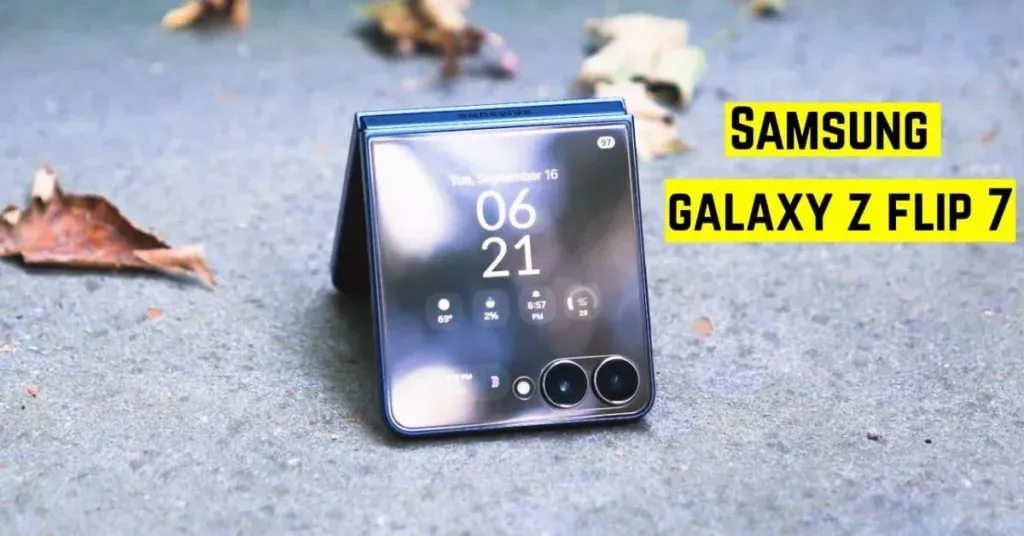
The Samsung Galaxy Z Flip7 5G represents the most significant evolution in the Flip series since its inception. By balancing a massive new cover display with a thinner, more pocketable chassis, Samsung has created a device that feels like a futuristic accessory. However, as 2025’s flagship landscape becomes increasingly competitive, the Flip 7’s reliance on in-house silicon and conservative charging speeds remains a point of contention.
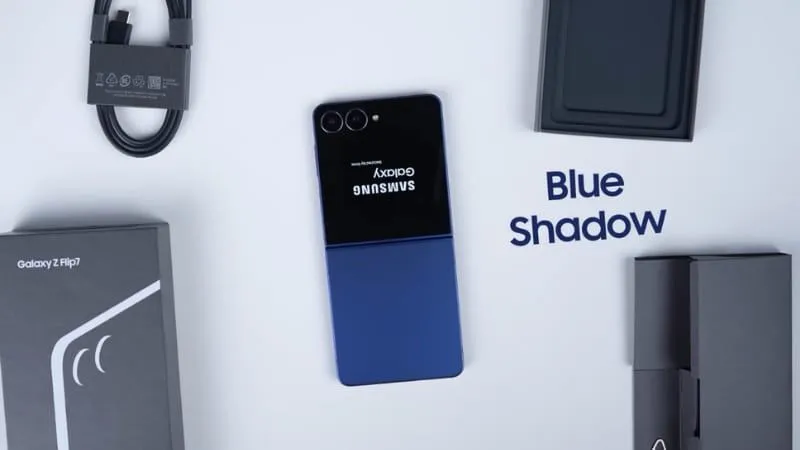
Design and Displays: Bigger, Slimmer, Smoother
Samsung has successfully shaved down the Flip 7 to a mere 13.7 mm when folded. Despite the slimmer profile, the device feels more substantial thanks to the 4.1-inch FlexWindow (cover screen). This expanded real estate allows for full-keyboard typing and more widget versatility, reducing the need to actually open the phone.
- Internal Canvas: The 6.9-inch Dynamic AMOLED 2X remains a class leader. With a 120 Hz refresh rate and a significantly shallower crease, the viewing experience is nearly indistinguishable from a standard flagship.
- The Build: While the IP48 rating adds a layer of solid-particle protection, the finish remains notoriously slippery. Furthermore, the new Armor FlexHinge is stiffer; while it feels durable, it limits the “prop-up” angles to roughly 130°, a slight regression for fans of Flex Mode photography.
Performance: The Exynos Shift
In a polarizing move for 2025, Samsung equipped the Flip 7 with the Exynos 2500 chipset paired with 12 GB of RAM.
- Everyday Use: The Galaxy Z Flip7 device is buttery smooth. For scrolling, multitasking, and AI-driven tasks, the Exynos chip is optimized perfectly for One UI 8.
- Thermal Constraints: The “Flip” form factor continues to struggle with heat dissipation. Under heavy gaming loads, the device triggers thermal throttling, leading to frame rate drops. Power users may find the custom chipset falls slightly behind the Snapdragon 8 Elite variants found in the Fold series.
Camera: Software Over Hardware
The hardware remains familiar: a 50 MP main sensor and a 12 MP ultrawide.
- The Good: Daylight photos are vibrant with the signature Samsung pop. The AI-driven ProVisual Engine significantly cleans up low-light noise compared to the Flip 6.
- The Bad: There is still no telephoto lens. In a $1,000+ smartphone, the lack of optical zoom feels increasingly restrictive, especially when compared to “slab” flagships like the S25.
Battery and Charging: The Bottleneck
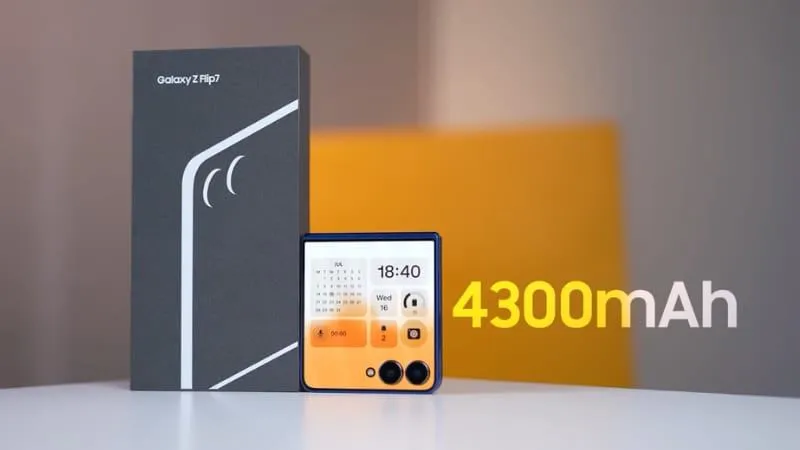
The 4,300 mAh battery is a respectable jump in capacity, but it faces high demands from the dual 120 Hz displays.
- Endurance: It is a reliable “one-day” phone for moderate users.
- The Catch: Charging remains capped at 25 W. In an era where competitors are hitting full charges in under 45 minutes, the Flip 7’s 90+ minute wait time feels antiquated.
The Verdict
✅ The Pros
- Elite Portability: Thinner and lighter without sacrificing screen size.
- Functional Cover Screen: The 4.1-inch display is a productivity game-changer.
- Future-Proof: 7 years of guaranteed OS and security updates.
- Galaxy AI: Seamless integration of Gemini and on-device transcription.
❌ The Cons
- Thermal Throttling: Not a device built for marathon gaming sessions.
- Stagnant Charging: 25 W wired charging is too slow for 2025.
- No Zoom: The lack of a telephoto lens limits creative versatility.
Final Thought: The Galaxy Z Flip7 is the best-looking and most functional foldable for the average consumer. It’s a lifestyle masterpiece that excels in software and style. it is best for daily use. However, if your priorities are “performance first” or “photography first,” the compromises of the foldable format are still present.
Disclaimer: This article is for informational purposes only. Specifications, features, and availability may change over time. We do not guarantee the accuracy or completeness of the information. Readers are advised to verify details from official sources before making any purchase decisions.