
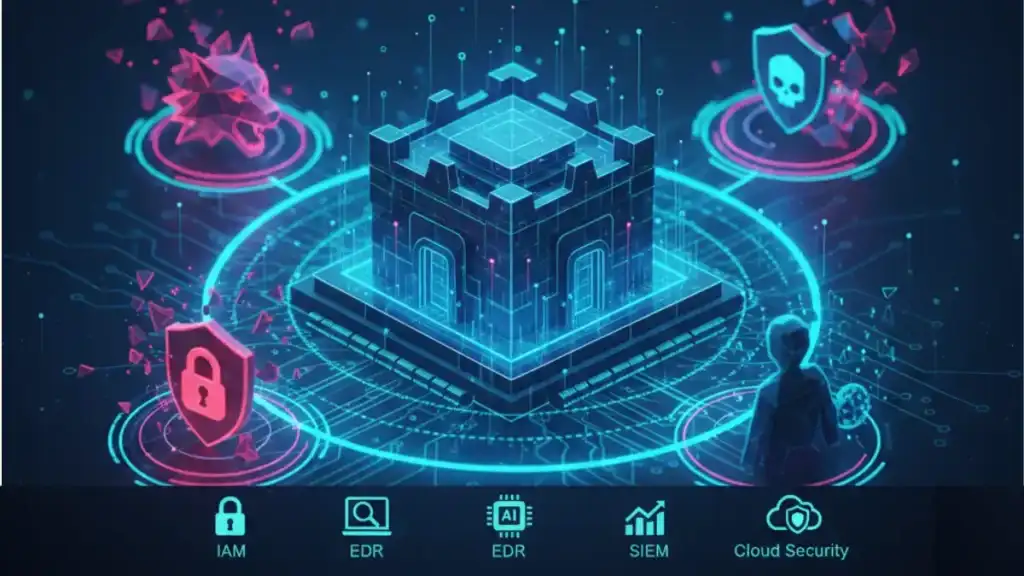
In today’s rapidly evolving digital landscape, businesses of all sizes face an ever-growing number of cyber threats. However, it is large corporations and institutions that are often the primary targets for sophisticated cyberattacks. This is why Enterprise Cybersecurity Solutions have become an indispensable part of modern business infrastructure. From data breaches and ransomware to insider threats and zero-day exploits, the risks are real, costly, and constantly changing.
Organizations that fail to invest in robust security frameworks risk not only financial loss but also reputational damage, legal liability, and operational disruption. This article explores the importance of Enterprise Cybersecurity Solutions, the key components that make them effective, and how your organization can implement them successfully.
Why Enterprise Cybersecurity Solutions Matter

Unlike small businesses, enterprises operate complex, distributed IT environments with thousands of endpoints, multiple cloud platforms, and vast amounts of sensitive data. Managing security at this scale requires purpose-built tools and strategies. Enterprise Cybersecurity Solutions are specifically designed to address these challenges, offering scalability, centralized management, and advanced threat intelligence that generic tools simply cannot provide.
Key reasons why enterprises need dedicated security solutions include:
- Large attack surfaces with thousands of devices and users.
- Strict regulatory compliance requirements such as GDPR, HIPAA, and SOX.
- High-value data that makes them prime targets for cybercriminals.
- Complex supply chains and third-party vendor risks.
- The need for 24/7 monitoring and rapid incident response.
Key Components of Enterprise Cybersecurity Solutions
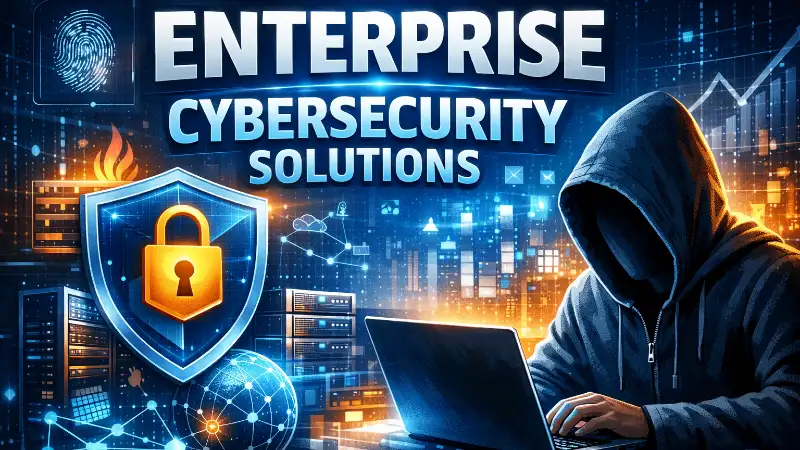
A comprehensive security framework is not a single product but a layered combination of technologies, policies, and practices. Below are the core pillars of effective Enterprise Cybersecurity Solutions.
- Identity and Access Management (IAM): Ensures that only authorized users can access critical systems and data. Multi-factor authentication (MFA), single sign-on (SSO), and role-based access control (RBAC) are essential components.
- Endpoint Detection and Response (EDR): Solutions monitor all endpoints—laptops, mobile devices, and servers—in real time. They provide deep visibility and enable rapid containment of incidents.
- Security Information and Event Management (SIEM): Platforms collect and analyze data using AI and machine learning to detect anomalies. They provide actionable insights and support compliance reporting.
- Network Security and Firewalls: Including next-generation firewalls (NGFW) and network segmentation. These tools filter malicious traffic and prevent lateral movement within networks.
- Cloud Security: Protects workloads in AWS, Azure, Google Cloud, and hybrid environments through Cloud Access Security Brokers (CASB) and proper configuration management.
- Data Loss Prevention (DLP): Tools monitor and control the transfer of sensitive data, ensuring intellectual property and customer records do not leave the organization unauthorized.
Benefits of Investing in Enterprise Cybersecurity Solutions
Organizations that deploy robust Enterprise Cybersecurity Solutions gain significant advantages. These include:
| Benefit | Impact |
|---|---|
| Financial Protection | Reduces the risk of costly data breaches, which average $4.88 million per incident. |
| Brand Integrity | Enhanced customer trust and brand reputation through robust protection. |
| Operational Speed | Faster detection and response to threats via automated and intelligent tools. |
| Legal Safety | Improved regulatory compliance (GDPR, HIPAA, SOX) and avoidance of hefty fines. |
| Continuity | Business continuity and reduced downtime from potential cyber incidents. |
| Visibility | Greater visibility into the entire IT environment, including endpoints and cloud workloads. |
Best Practices for Implementation
Successfully deploying Enterprise Cybersecurity Solutions demands a strategic, organization-wide approach.
- Conduct a Risk Assessment: Identify valuable assets, vulnerabilities, and likely threat vectors.
- Adopt Zero Trust Architecture: Follow the principle of “never trust, always verify” for every user and device.
- Invest in Employee Training: Mitigate human error, which remains a leading cause of breaches.
- Test Incident Response: Maintain a documented and regularly tested response plan.
- Maintain Hygiene: Ensure consistent patching of systems and partner with trusted Managed Security Service Providers (MSSPs).
The Future of Enterprise Cybersecurity Solutions
The cybersecurity landscape is constantly evolving. The next generation of solutions will be shaped by Artificial Intelligence (AI), Machine Learning, and Automation. AI-powered threat detection can analyze billions of signals in real time, identifying attacks faster than human teams.
Furthermore, Extended Detection and Response (XDR) platforms are unifying data across the entire ecosystem. As we look ahead, Quantum-safe cryptography is emerging as a critical concern that organizations must begin preparing for today.
Conclusion
Cyber threats are not going away—they are growing more sophisticated and destructive every year. For large organizations, the question is no longer whether to invest in security but how to do so most effectively. Enterprise Cybersecurity Solutions provide the comprehensive, scalable, and intelligent protection needed to thrive in the digital age. By building a security-first culture and investing in the right tools, your organization can confidently defend against today’s threats while preparing for tomorrow’s.