
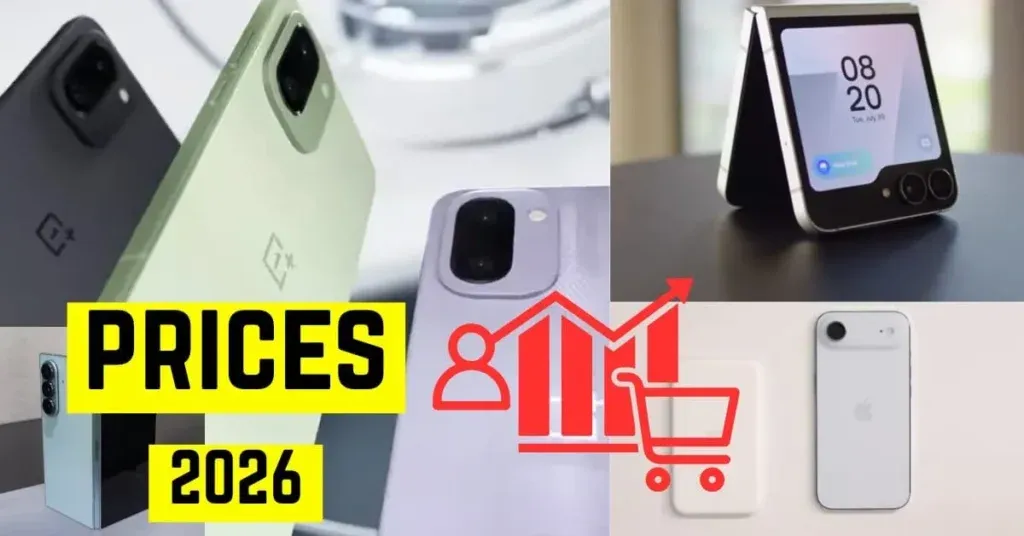

In the United States, the era of the $700 flagship is officially a memory. What used to be considered a premium price point is now the baseline for “entry-level” models, while top-tier devices routinely command between $1,200 and $1,600. As we navigate 2025, consumers are facing a growing disconnect between soaring price tags and incremental upgrades.
Why is this happening, and does the “Ultra” or “Pro Max” experience still justify the investment? Let’s analyze the factors driving the US market today.
Advanced Chips Are Driving Prices Higher
The “brain” of your smartphone is becoming its most expensive organ. In 2026, premium processors are no longer just about speed; they are specialized engines for Generative AI and high-end computation.
The cost of designing and producing these chips has spiked. Leading manufacturers like Qualcomm and Apple are utilizing cutting-edge 3nm (nanometer) and 2nm processes. As these transistors get smaller and more complex, the “yield” (the number of usable chips per wafer) becomes more difficult to maintain, driving up the unit price that phone manufacturers pass on to you.

Higher Manufacturing & Supply Chain Costs
While the global supply chain has stabilized, the floor for production costs has been permanently raised. In the US market, several economic factors keep retail prices high:
- Labor and Logistics: Increased wages in manufacturing hubs and rising fuel costs for trans-Pacific shipping add invisible dollars to every box.
- Raw Materials: The rare earth minerals required for batteries and high-end magnets have seen volatile pricing.
- Quality Standards: US consumers demand high durability ratings (IP68 water resistance, Gorilla Glass Armor), which require more expensive testing and materials during assembly.
AI Features Add Hidden Costs
In 2026, you aren’t just buying hardware; you are buying a massive suite of AI-driven software. Features like “Magic Eraser” video editing, live translation, and predictive assistants require billions of dollars in R&D and ongoing server costs.
Manufacturers now include these “software-as-a-service” costs in the hardware price. Furthermore, to make these AI features run locally (on-device) rather than in the cloud, phones require significantly more RAM (Memory), which has added another layer of expense to the bill of materials.
Camera & Display Technology Is More Expensive Than Ever
The “Camera War” in the US has moved from megapixels to sensor size and optics. To compete, flagships now utilize:
- 1-inch sensors: Bringing professional-grade light intake to mobile devices.
- Periscope Zoom Lenses: Complex mirror systems that allow for 10x or 100x zoom.
- LTPO Displays: Screen technology that can scale from 1Hz to 144Hz to save battery while staying incredibly bright (3,000+ nits).
- Premium Materials: The shift from aluminum to Titanium frames adds prestige but also significantly higher machining costs.
Carrier Plans & Financing Mask the Real Cost
The primary reason $1,400 phones sell in the US is the “low monthly payment” illusion. US carriers like Verizon, AT&T, and T-Mobile have mastered the 36-month financing cycle.
By spreading the cost over three years, a $1,200 phone costs “only” $33 a month. This psychological decoupling makes consumers less price-sensitive, allowing manufacturers to raise the total MSRP (Manufacturer’s Suggested Retail Price) without seeing an immediate drop in sales volume.
Are Flagship Smartphones Overpriced for US Users?
For the vast majority of Americans, the answer is yes.
Most users primarily engage in “light” tasks: scrolling social media, checking email, and taking casual family photos. A $1,500 flagship is essentially a supercar being used for a grocery run. Mid-range “A-series” or “FE” models now provide 90% of the flagship experience—including great screens and multi-year software support—at nearly 50% of the cost.
Smart Buying Tips for US Consumers
If you want to beat the “price creep” in 2026, consider these strategies:
- Go Unlocked: Buying directly from the manufacturer often provides better trade-in values and more flexibility to switch carriers.
- The “One-Year-Back” Rule: A flagship from 2024 is still incredibly powerful in 2025 but can often be found at a $300–$400 discount.
- Refurbished is Mainstream: Platforms like Back Market or Amazon Renewed offer “Like New” devices with warranties for a fraction of the cost.
- Wait for the Holidays: In the US, Black Friday and “Back to School” sales are the only times you should consider buying a brand-new release.
Final Verdict
Smartphone prices are rising due to a “perfect storm” of advanced silicon, AI R&D, and the premiumization of materials. While the technology is more impressive than ever, the value proposition for the average user has shrunk. In 2026, the smartest upgrade isn’t necessarily the most expensive one—it’s the one that matches your actual daily usage.
Disclaimer: This article is for informational purposes only. Specifications, features, and availability may change over time. We do not guarantee the accuracy or completeness of the information. Readers are advised to verify details from official sources before making any purchase decisions.